
Gas Incident Response
Gas incident response: Dos and don’ts
Responding to these high-consequence emergencies requires skill and technical knowledge, as well as an understanding of the tactics that are appropriate to various incident types.
Before proceeding with this module, please read some Dos and Don’ts that pertain universally to all natural gas incidents. These tips are also available to download and print here.
Do:
- Keep the local gas utility informed of any developments through your dispatcher.
- Consult with representatives of BHE GT&S or the local pipeline operator, and/or the local gas utility, upon your arrival at the incident scene.
- Evacuate per the DOT Emergency Response Guide.
- Barricade or rope off the area, rerouting pedestrians and traffic if necessary.
- If there is a strong gas odor and/or your monitoring equipment detects natural gas nearing or exceeding concentrations of 5 percent gas, evacuate buildings and bystanders.
- Knock on doors instead of ringing doorbells.
- Instruct those in the area and building occupants not to turn any electrical equipment on or off. This includes lights, appliances, motors, circuit breakers and any battery-powered devices.
- Eliminate sources of static electricity: Do not step on doormats, rub hands, or shuffle feet.
- Check other buildings in the surrounding area for the presence of gas.
- Alert the local electric utility through your dispatcher if the situation warrants a discontinuation of electric service to a building.
Don’t:
- Don’t enter buildings without wearing personal protective equipment (PPE) and positive pressure self-contained breathing apparatus (SCBA).
- Do not step on doormats. Friction from boots could create a spark of static electricity.
- Don’t try to extinguish burning gas.
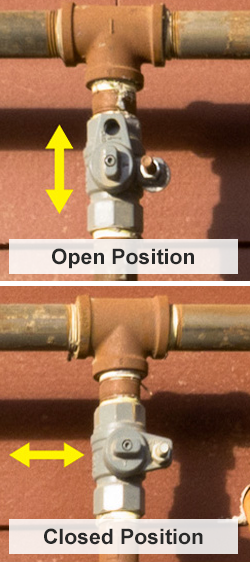
- Don’t operate any gas valves, other than the aboveground shutoff valve before the service meter, or appliance supply line shutoff valves. Never handle underground pipeline valves or relief valves.
- Don’t open any gas valve that has been shut off.
- Don’t park vehicles nearby or leave engines running if a street leak is suspected.
- Don’t park in front of buildings where a gas leak is suspected.
- Don’t park directly over manhole covers or near storm sewer grates.
- Don’t ventilate a building without first coordinating with local gas utility personnel, and verifying gas has been shut off and ignition sources have been eliminated.